Some of you may have heard about the thing that happened at the US Capital in Washington, DC in the USA. Some of you may not. It was in newspapers, on the tv news and on the internet. Some grownups may have told you about it because they think kids should know what’s happening in the world. Other grownups may have not because they don’t want to scare kids.
Do YOU think kids should know about bad things that are happening in the world? Why or why not?
Teachers have the job to think about kids brains and what is good for making their minds stronger so they can grow up to be smart and wise. Teachers know that kids can do big thinking and that kids can be very brave, so we are going to tell you about the thing that happened at the US Capital.
Are you ready for the story?
On Wednesday, January 6, 2021 a group of people went to Washington DC to protest. Protest means people were angry and disagreed with the government about something. Protesting is an important part of democracy. Democracy means a system where the people choose the government leaders. Protesting is important to democracy because it means the people can stand up and say they disagree.
In a democracy, people vote to choose the leaders. There are many countries that are democracies. You have to be 18 years old to vote and a citizen of the country you live in. Even though YOU aren’t 18 yet, you ARE a citizen of your school. That means you are on your school team and that you are an important part of your school community. As a citizen of your school you have to work, help and learn. You have jobs and responsibilities that help keep the school working.
What are some things you as a citizen of your school do to help the community? What makes kids good school citizens?
One of the most important parts of being a good citizen is to be informed about the government so people can make sure they vote for leaders who are making wise choices. It can be a lot of work knowing all of the things that are happening in the world, so newspapers, tv news and the internet help tell people what’s going on. People who write the news are called journalists. Journalists went to college to learn how to research, write and prove what they are saying. Journalists ask questions to people in government and write what they say to try to help people understand what’s happening. Journalists work is so important to democracy, it’s written into the Constitution. The Constitution is a list of all the rules of the USA.
Some leaders don’t like journalists because they tell the truth to the people. They try to get news sources that tell the truth to go out of business. Then they work to get news companies that will only tell the things they like to hear, even if it’s a lie. Leaders who are doing bad things often want to hide the things they are doing. If you’ve ever read the book The Lorax by Dr Seuss, you will notice the Once-ler never shows his face. Some leaders want to do the sneaky-sneak and don’t want the people to know the things they are doing, so they hide and say that truth news is lies. They might even try to put the journalists in jail so they can’t tell the people what’s really going on. It’s happening in lots of places right now all over the world.
Truth and lies are a BIG part of this story. When you do something wrong, do you think telling the truth about it is important? Why or why not?
The people who went to Washington DC on January 6, 2021 went to protest because they believed what a leader, called the President, told them about the election. In November, there was an election and the President lost. He got voted out by the people. The President was angry and said the vote wasn’t fair. He went to court to try to prove it. The court said he was wrong, but he still didn’t agree. He called other leaders and asked them to throw out and hide people’s votes so he could still win. They said no. He got mad and called them names. He told his whole team that everyone was wrong and that people cheated and he actually won. He told everyone that it was actually the journalists telling lies in the news and that the judges and other government leaders were all working together to go against him. Some people who were on his team said he was wrong and they broke away, but a lot of people on his team said that he was right. They believed what he told them. They believed that all the news was bad and fake and only what he was saying was the truth.
Have you ever been on a team that lost? How did it feel to lose? When you lose should you say the other team cheated? Why or why not?
Cheating sometimes does actually happen, that’s why referees, judges and facts are important. All the judges, facts and referees of the election said there was no cheating, but the group that came to the US Capital on January 6, 2021 believed the leader SO MUCH that some of them wanted to break into the government building called the US Capital to stop them from saying the leader lost. They were angry. Some of them even wanted to hurt the people who said there wasn’t cheating. Some of them wore shirts that said hurting people was a good idea. Some of them broke into the US Capital and went looking for the leaders. They said they didn’t want to hurt anyone, but people did get hurt. People even died trying to stop them. They scared a lot of people because they were breaking the law and not listening to the facts. It is a scary time in the USA because these people wanted to defend the leader SO MUCH they wouldn’t listen to facts, the news or to what the citizens of the country decided in the vote.
There are companies that study where people go on the computer and then try to figure out what lies people might believe. Once they get people to believe a small lie, they tell them more and more lies until people don’t even know what’s true or false anymore. They want to get people angry and confused so they make bad decisions. This is why teachers always want you to ask questions and to walk away when something doesn’t feel right.
Do you think it’s easy or hard to walk away when something doesn’t feel right to you? Why or why not?
Truth can be a tricky thing sometimes because there can be mistakes. People might not have all of the facts or have their facts wrong, but they still believe that their thinking is right. They might even believe it SO DEEP that they won’t listen to logic. This is why math is so important and why your teachers want you to learn and study math everyday. Math helps train your brain to be logical. In math, you have to prove your thinking with facts and admit when you’ve made a mistake. In math, it’s extra good work to be able to find mistakes and errors in logic. That’s what math is actually all about!
Look at the math problem below. Which do you think is the truth? Why? Can you prove it?
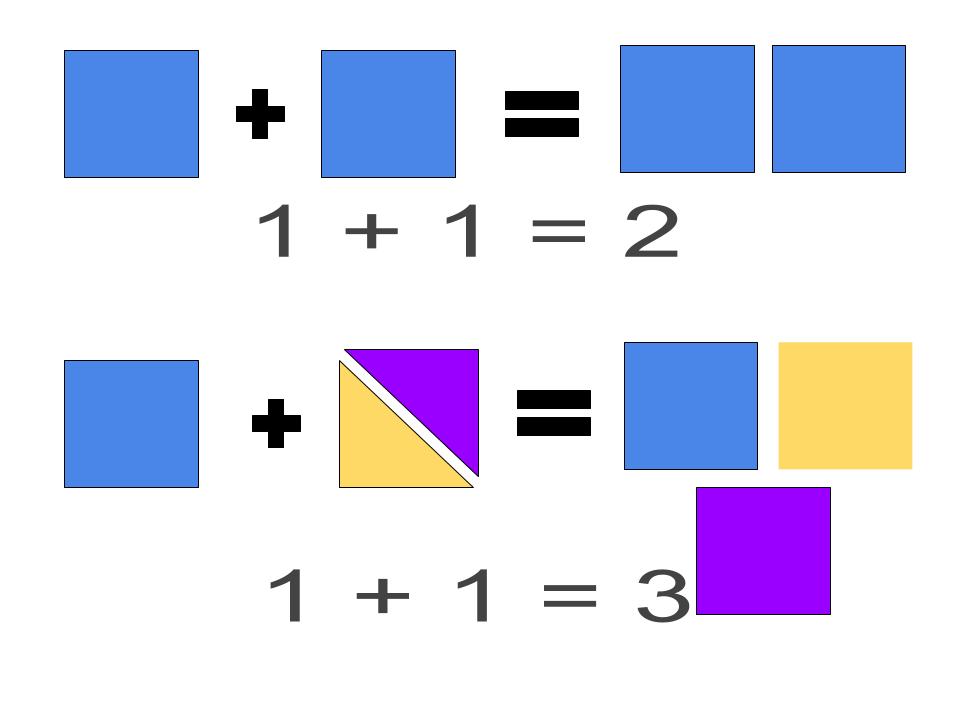
There is A LOT more to this story, but today’s piece is to try to help you get thinking about why telling the truth is so important and why you should always be thinking, “does this make sense”? Being brave enough to walk away when you think people might be trying to lead you down a wrong path is hard but an important part of growing up and learning.
We will talk more next time! Keep learning, thinking and helping one another! We are all here on the planet earth team and we have to work together!
We are excited to make new friends in a school far away this year. They live so far away that it is across the world from us! We looked at a globe and talked about how when we are in school, they are sleeping and when we are sleeping, they are awake and at school! The earth is big and round. It’s actually moving but very slow-so slow you can’t feel it moving but it is!
We wanted to call our friends on the phone but then we would wake them up or they would wake us up! So we decided we will try to text them! We also made a video for them- we are learning the song!
Here is the video! You need the secret password to watch it! 🙂
Many Pretty Trees from Heidi Echternacht on Vimeo.
We want to show our friends who live around the world our tricks! Look what we can do!
JKLook What We Can Do! from Heidi Echternacht on Vimeo.
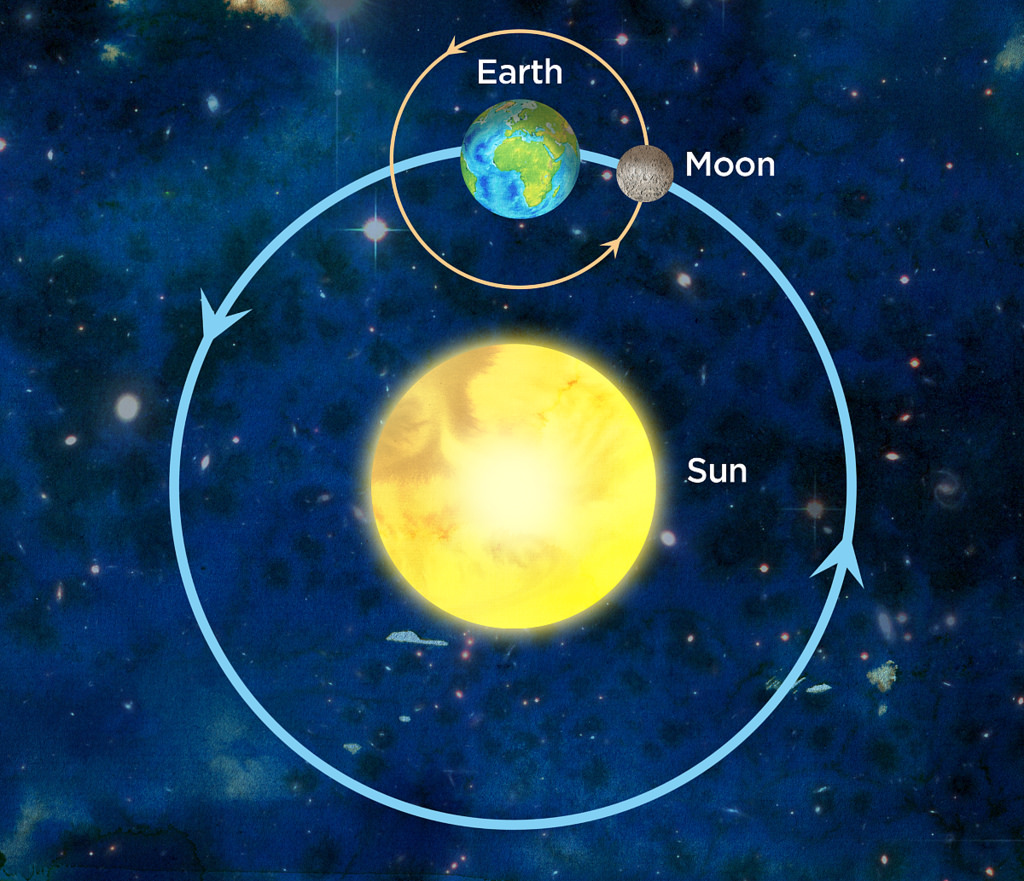
Someone asked how is it going to be night in India when it’s the day here.
“How do you know its night in India?”
“The sun moves in the night”
“Some places can be dark at the same time and light at the same time.”
“No! It’s because the sun can’t move to two places at once!”
“It’s not big enough to reach around”
“The sun is bigger than the earth”
“It’s so far away, it’s actually bigger”
Enter your password to view comments.
We wonder: “Why do leaves change colors?”
“I know! They fall down to hibernate for the winter!”
“They change color so they can fall off!”
“Temperature. The snow is too cold for them.”
“Older trees don’t change color, young trees do.”
We ask: “Are you sure? Is it definitely true that older trees don’t change color? How do you know that?”
Some of us say there are trees that stay green forever. They are called evergreen. There’s a clue right in the name. So far we think you can tell them from the trees that change colors because they are darker green and they have a different shape.
These two videos tell the science about why leaves change colors:
Click here for the first video!
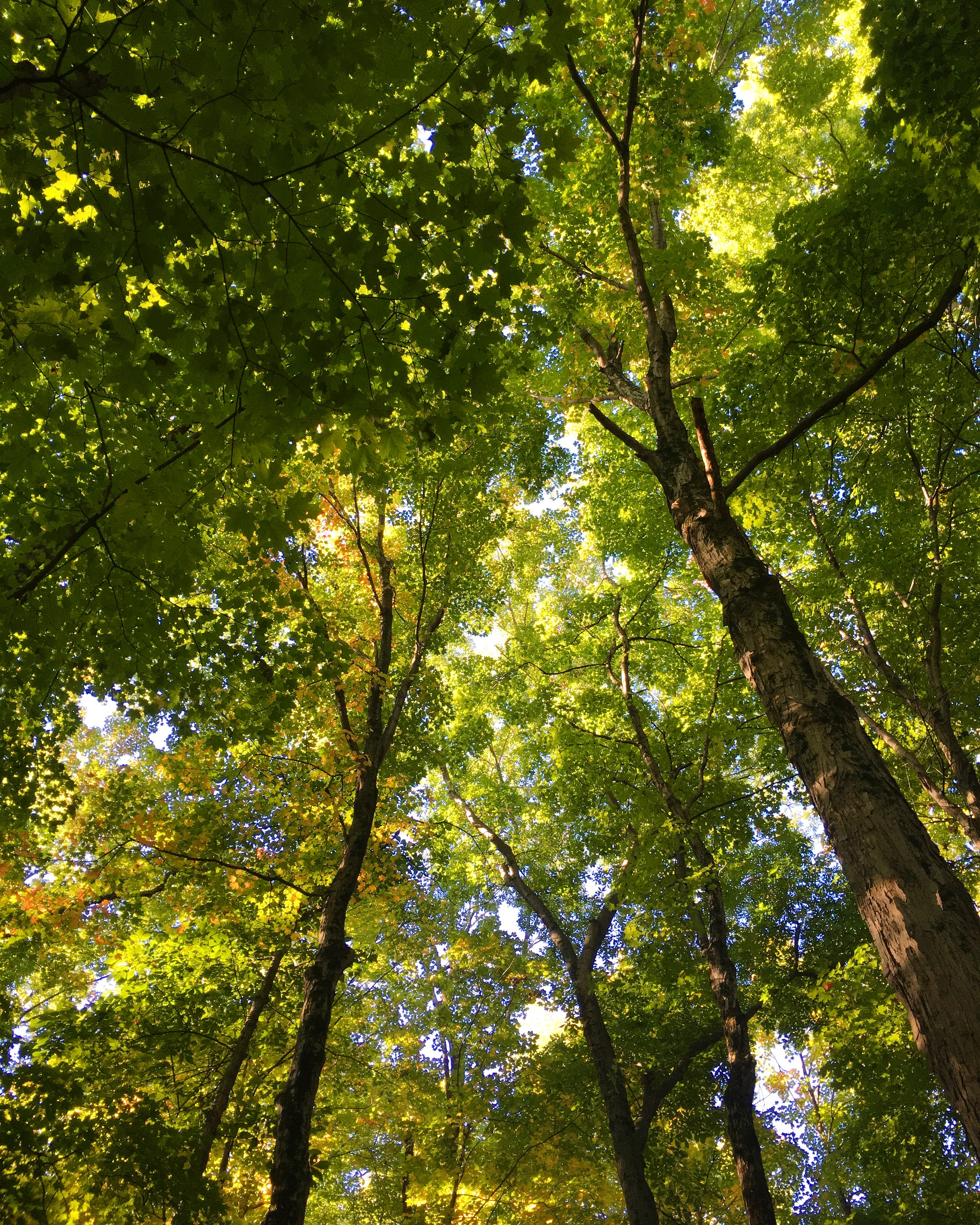
We are called the Sycamore and Sassafras class this year. We go on a walk every day. We are learning the names of all of the trees! We study books to match the picture and the words. Trees tell you their name by their leaves and bark and branches. Can you tell what kind of trees these are just by reading their leaves?
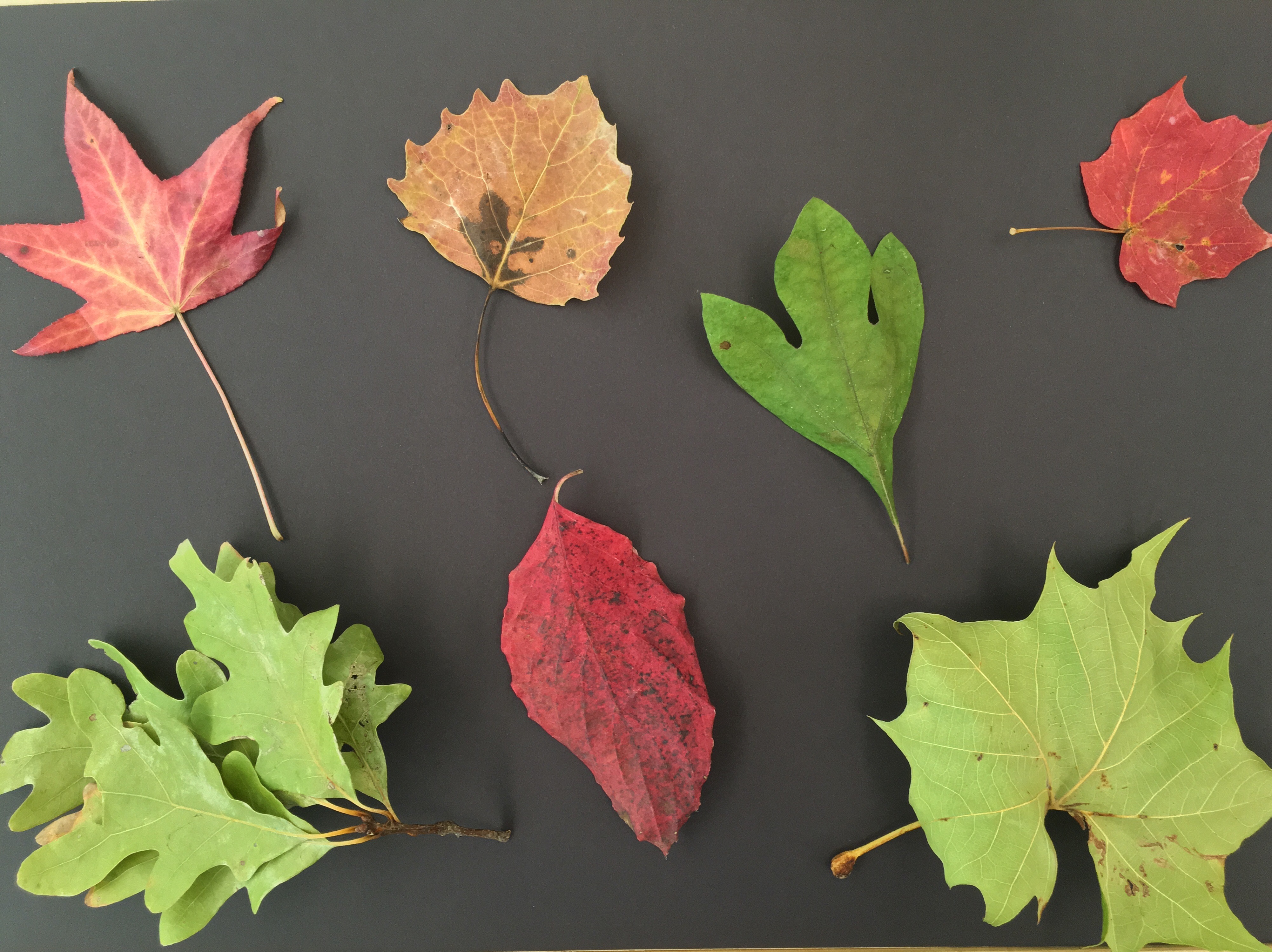
Some people say trees are magic because they can change the colors of their leaves. Ms. Echternacht (Ek-ter-knocked) keeps looking at the leaves on the trees but so many still look green. Ms Cagney says, “be patient”. Do you think these leaves will change color?
One day, we found a “bouquet” of leaves on the ground. We asked, “Will this bouquet of leaves change color?” 4 people said, “YES!”, 12 people “weren’t sure” and 1 person said, “NO!”
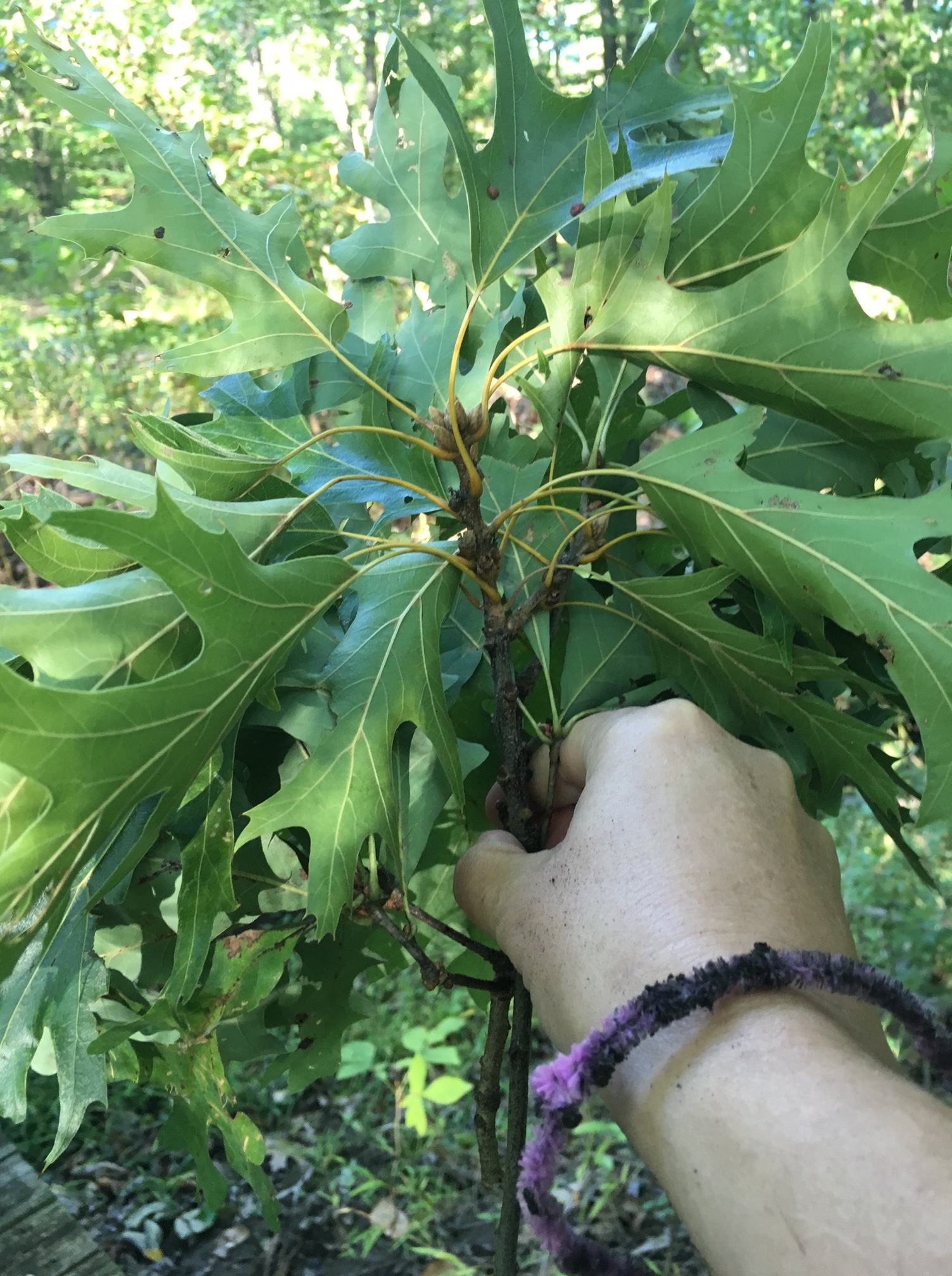
The 4 people who said the bouquets of leaves would turn colors explained “all green leaves change colors.”
The 1 person who said no said she thought they “have to be attached to get food to grow and change.”
Some people started changing their minds. We are thinking to put the bouquets in cups of water and see if they will change now.
What do YOU think?
We walk everyday looking for evidence that green leaves will change colors. Nothing happened for a long time. Then one day….
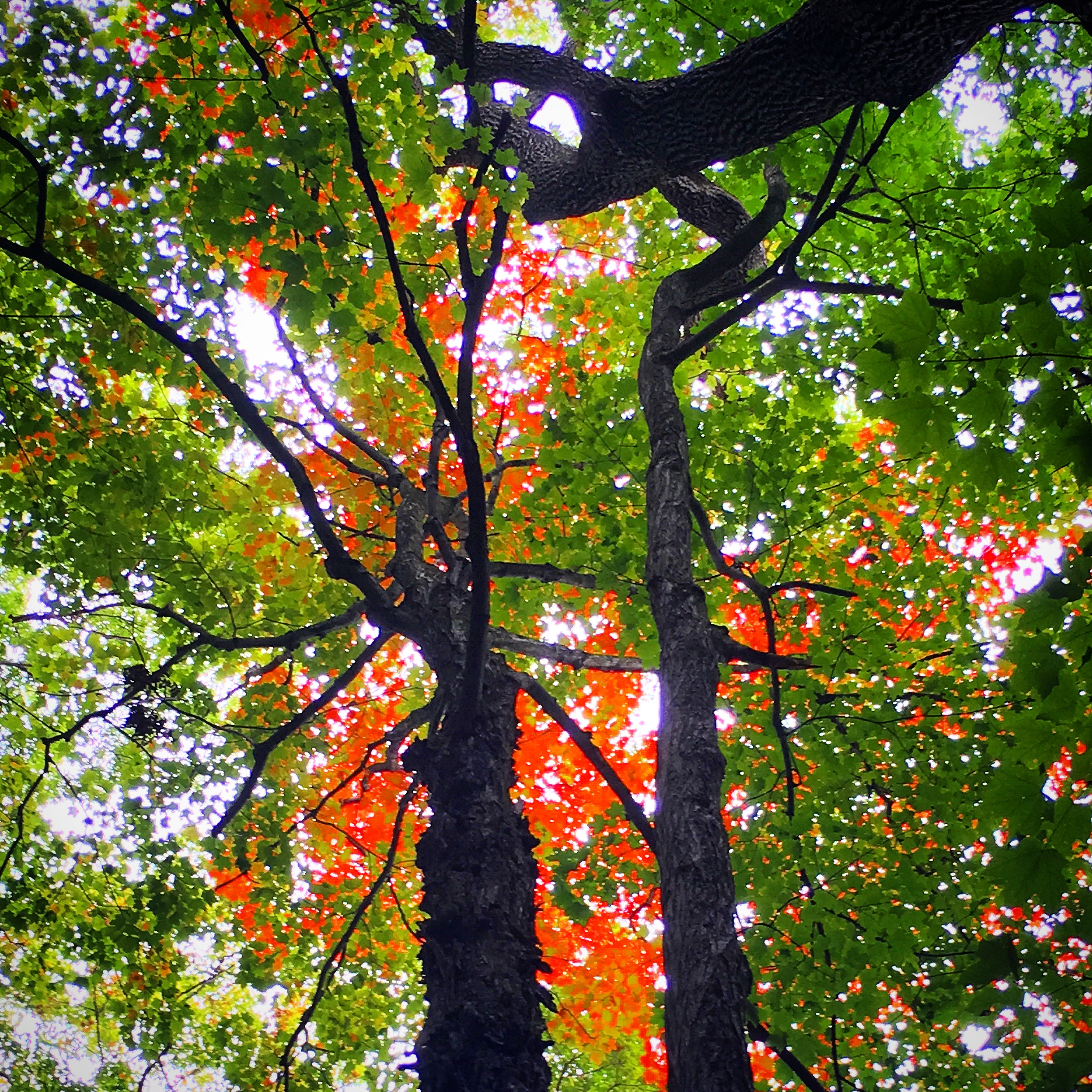
It’s HAPPENING!
Do all leaves change colors? How are trees doing this bit of magic? Can YOU change your colors? Why do you think trees do this? We are digging deeper everyday to discover the mysteries of trees.
Comments Off on Protected: Fairy Tale Theatre
We like these two songs about the Water Cycle! What do you know about the water cycle?
Mrs Cassidy is a first grade teacher in Canada. Canada is the neighbor of the United States. Look how fast our neighbors get ready for the snow- can YOU beat their time?
Last summer, Ms Echternacht (Ek-ter-knocked) went on an airplane to a teacher meeting in a place called Atlanta, Georgia. It’s hot and steamy there. It’s the place where Dr Martin Luther King, Jr. was born. One afternoon, Ms Echternacht rode the train to go see where Martin Luther King was born.
It was a long train ride. When Ms Echternacht got off the train, she was hot and tired. She looked around for a sign to show how to get to Dr. King’s house, but there were no signs. No one was even around. It was an empty part of town.
So, she started walking and hoping that she would see a sign soon, but there weren’t any. A Mom and her two little boys in bright red matching shorts were walking in front of her and Ms Echternacht heard them ask a man “Where is Dr. King’s house?”. The man she asked didn’t have very many teeth and at first, he did look a little scary, but he said, “This way, I’ll show you!” Ms. Echternacht said to the Mom, “I’m going there too!” So we all walked together.
The Mom and kids were from Chicago visiting their family and they really wanted to see where Dr. King lived. So did Ms Echternacht. We walked past the park and some empty stores. We walked past a big apartment building with lots of people sitting outside. They waved to us and the man with no teeth. It was where he lived. He told us “go left and go right and then a few more blocks and you’re there” and then told us goodbye. We said, ‘Thank you!” and waved back. We were so glad he showed us the way to get there!
We went left and right and then a few more blocks and finally we were there! Only it wasn’t his house yet- it was the church where Martin’s father preached and where Martin preached when he grew up.
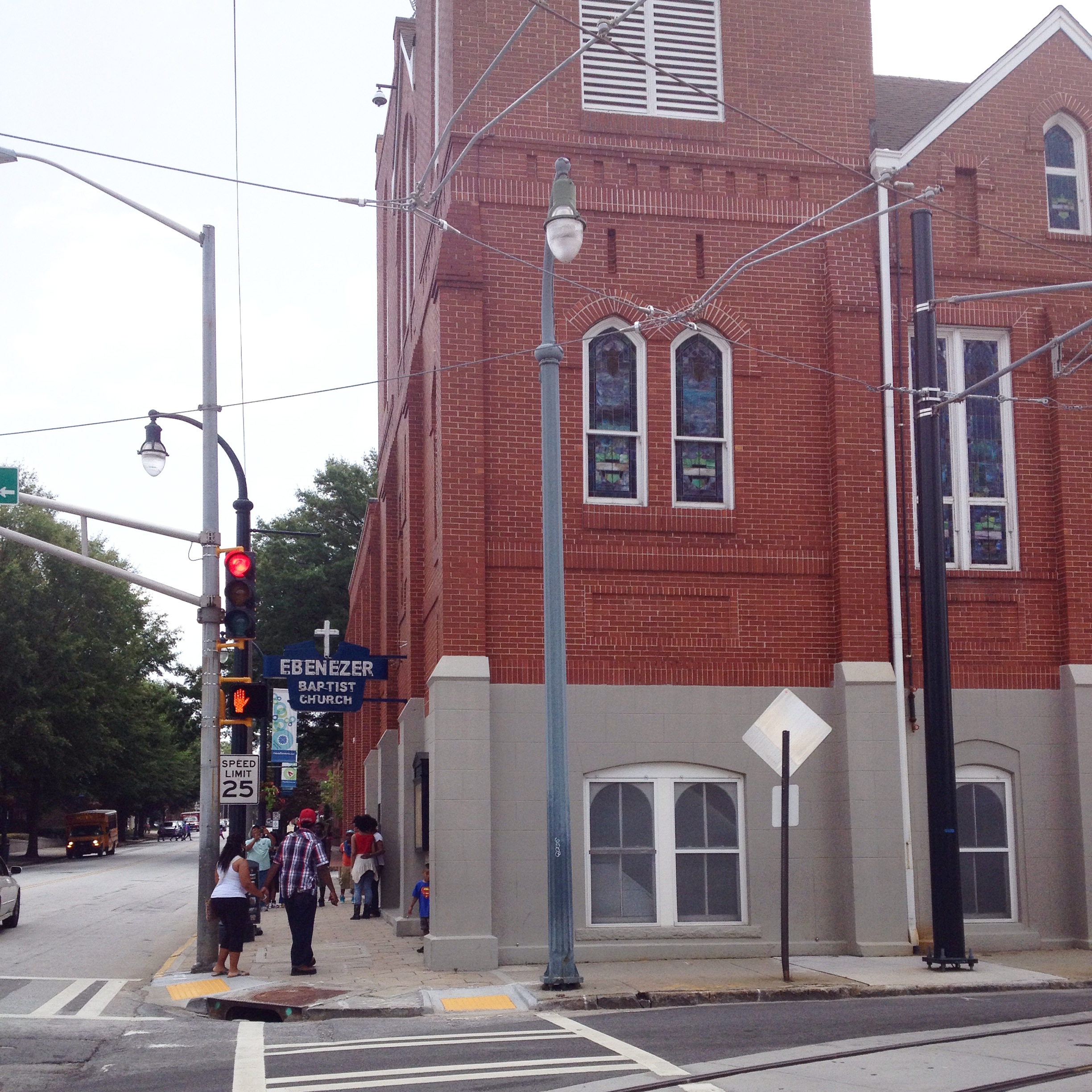
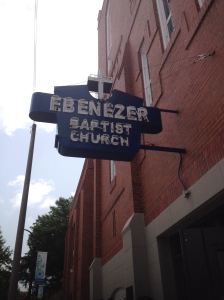
Ms Echternacht and the Mom and her two boys with bright red shorts all went into the church together to see what it was like. Everyone sat down very quietly and said prayers.
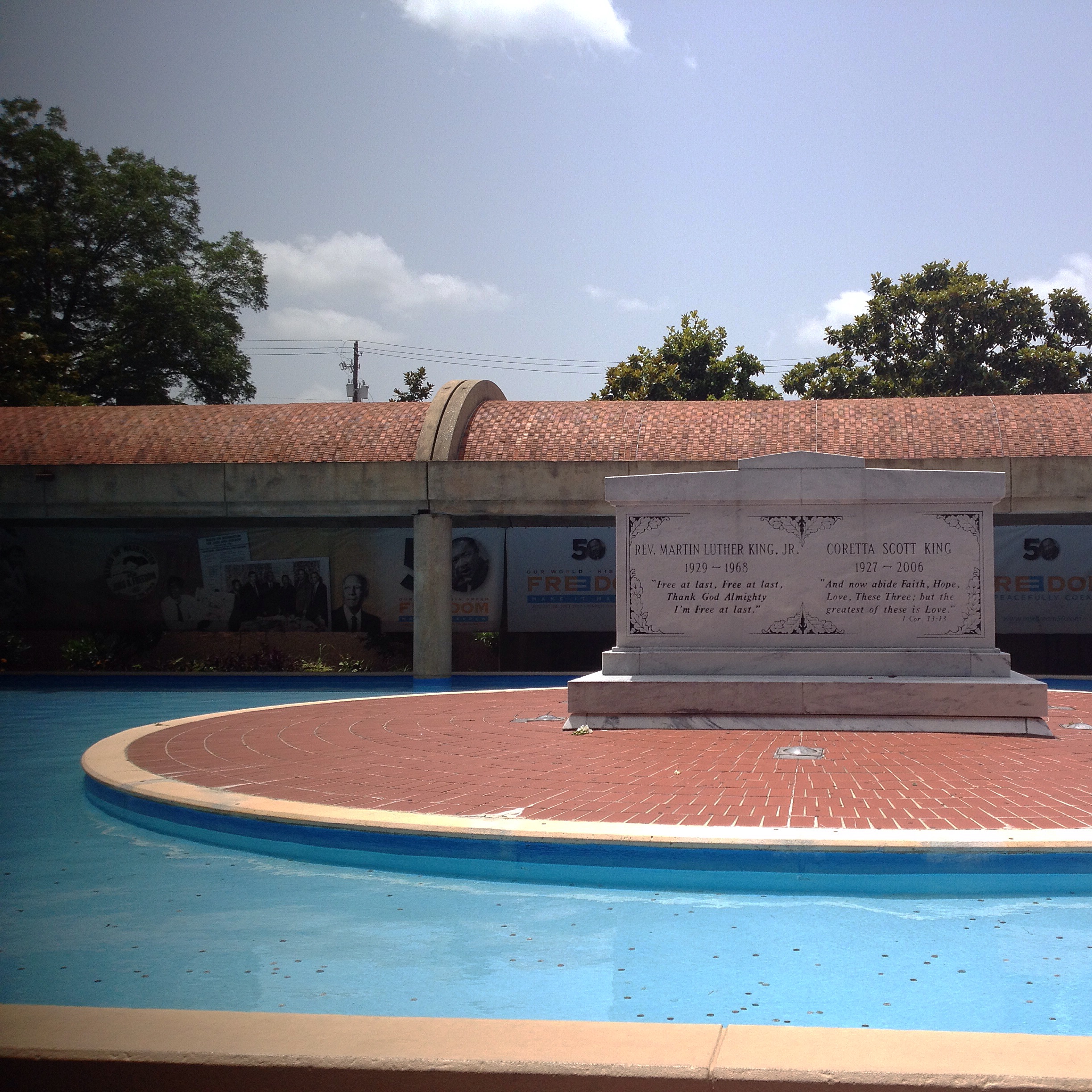
Ms Echternacht could feel Martin in the church. When she was ready to go, she thought maybe the Mom and her two boys in matching shorts had already gone, but no! they were still there! We all went to the gift shop together. Ms Echternacht got her six year old nephew a bright yellow T-shirt that said “Ebenezer Baptist Church”.
Finally, we were ready to get to Martin’s house. It was just one block away! We were almost there! But when we got there, the house was closed. It had taken us so long to get there that we couldn’t go in! We were just happy to see his house though, and so the boys in the bright red matching shorts sat on the front steps of Dr. King’s house and we all took a picture.
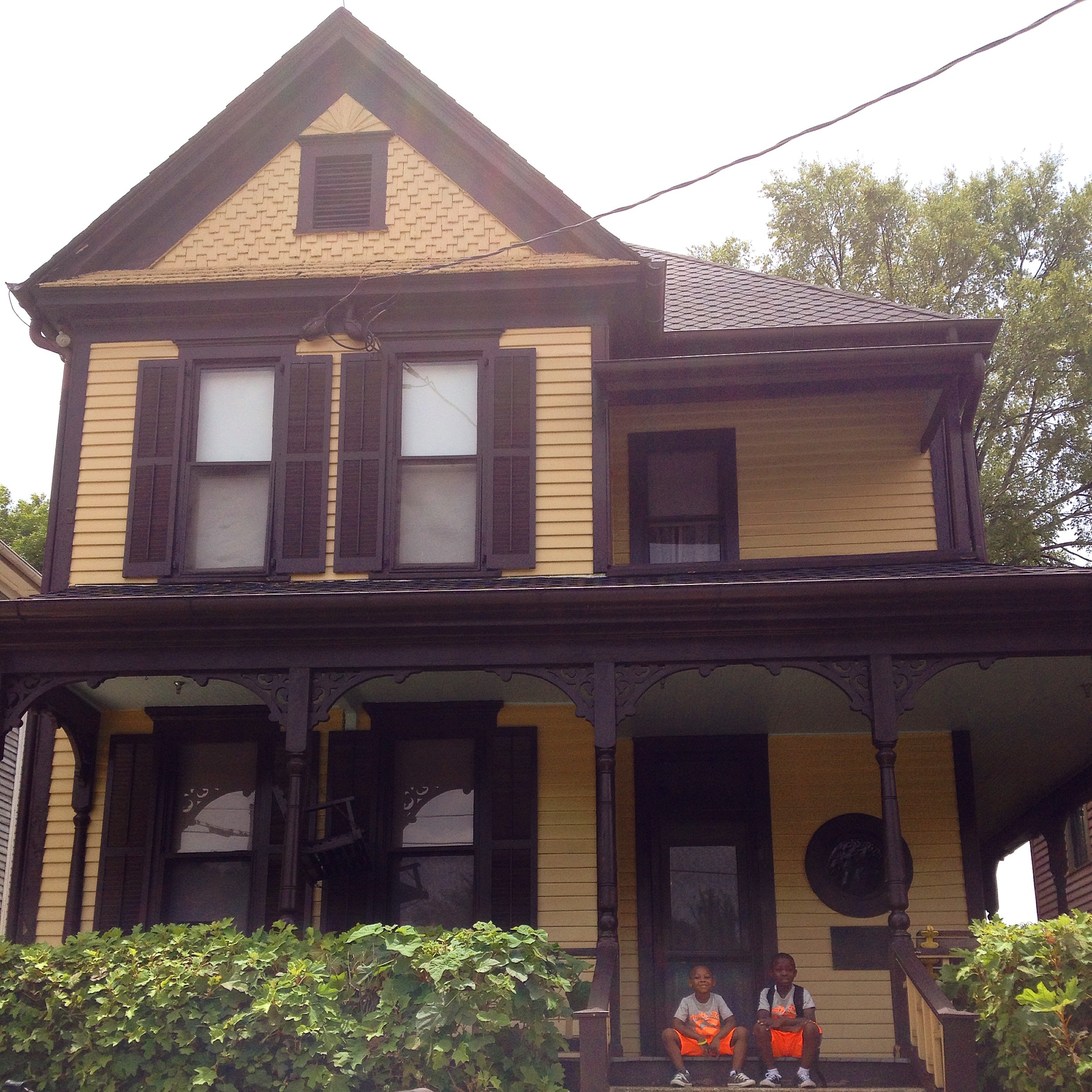
Dr King’s house where he was born January 15, 1929
We were getting tired, but there was still more to see! The big museum was just across the street and we wanted to see that too. Also the place where he was buried.
When Dr. King died, everyone was crying. Well, most everyone. The boss of Georgia did not want to give Dr King a big funeral. He wanted everyone to go away and forget about Martin. He thought Martin was bad. But everyone knew that Martin was good and everyone remembered him. They came from all over the world to march three and half miles and cry, sing and be very still and quiet for his funeral. People still cry today for Martin and teachers make sure to teach kids about him so no one will ever forget him.
We were all quiet for a long time. Then we went to the Museum. They had important things there from when Martin was alive.
Finally, we went across the street to the Dr King National Park.
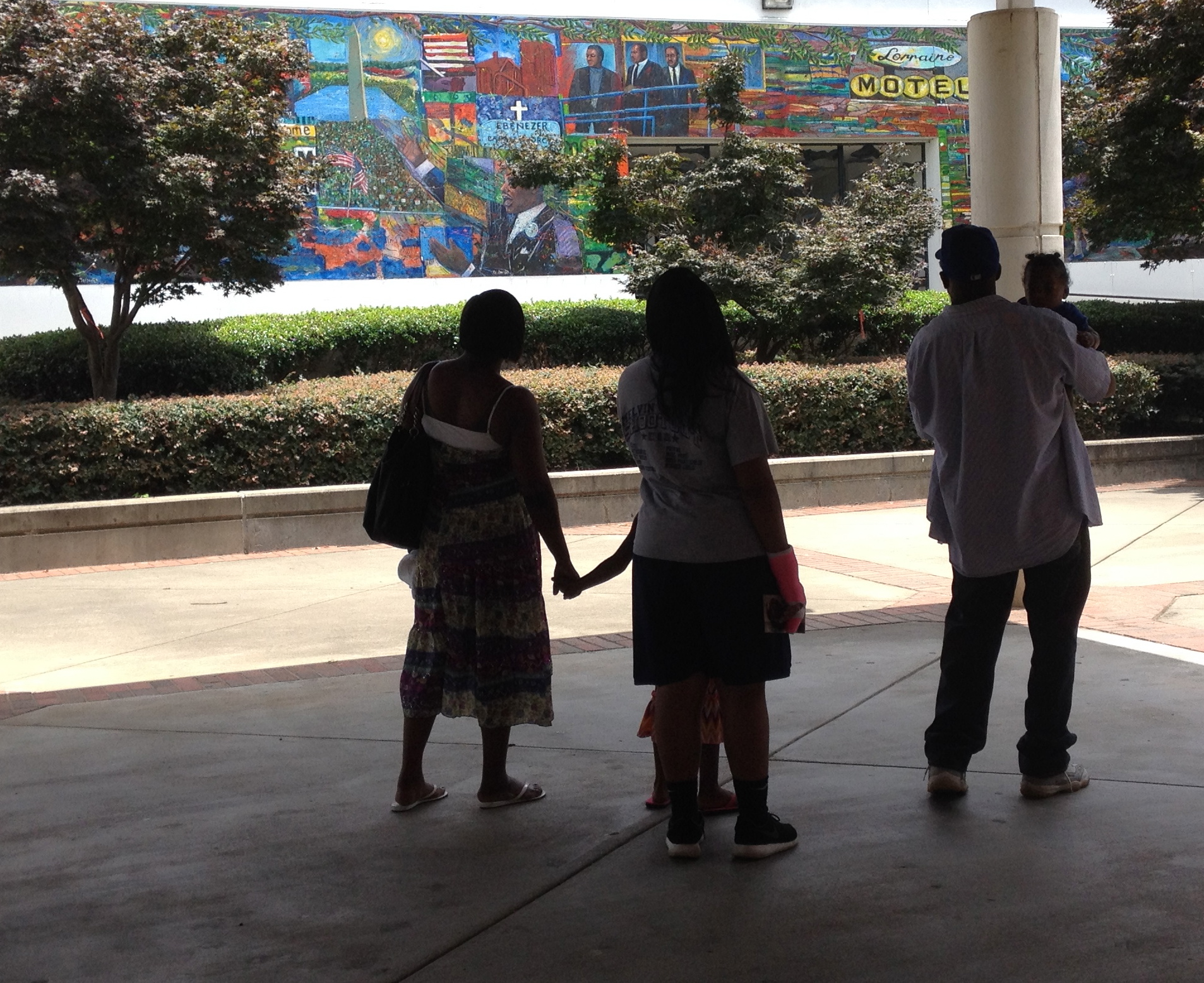
A family looks at the mural about Dr King’s life outside of the National Park
After seeing all of this, Ms Echternacht and the Mom and her two boys with the matching red shorts were very tired, but very happy. We were all so glad that no one would ever forget about Dr King. Then we started the long walk back to the train together.
Enter your password to view comments.
We were out playing and noticed the leaves were all over the ground! And they were different colors! Ms Echternacht couldn’t believe someone would tear all the leaves off the trees and paint them like that. What’s happened out there?!
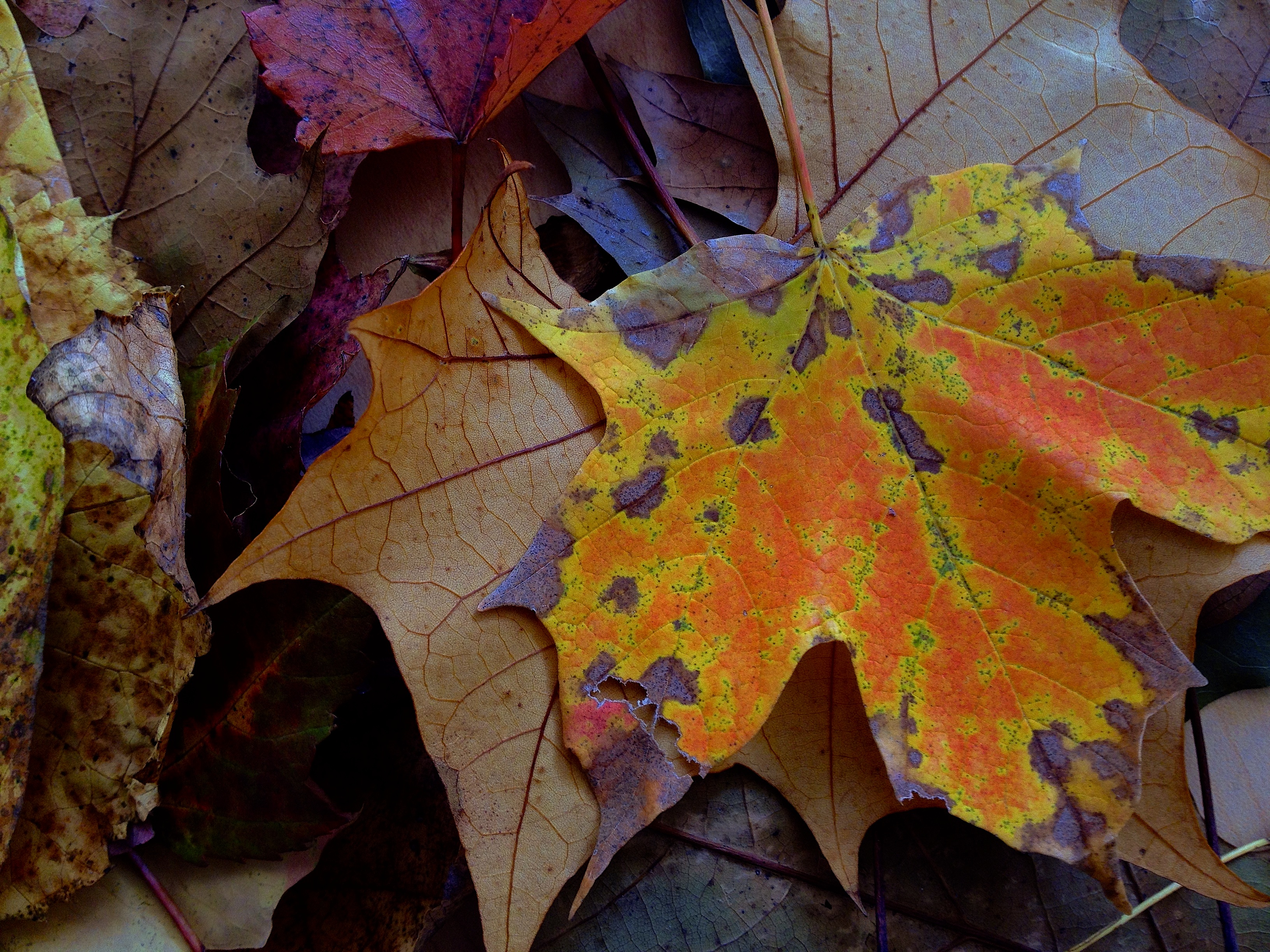
Someone said “No, that’s supposed to happen! It’s fall. That’s what happens in the fall.”
Teacher: “But why?! Why now? Why do they fall off?! How is that even possible to change colors? Are trees magic?”
“No! No one painted them! They just change.”
“The wind blows and it makes the colors change”
“No! That doesn’t make sense because it was windy in the summertime too.”
“The colder it gets, the heavier the leaves get and they fall down.”
“The leaves are happy.”
“They change on the first day of fall.”
“Maybe it has to do with water.”
“They don’t fall! They connect down. When it’s not fall, they connect up.”
‘They are hanging there and they just can’t take it anymore and they fall off!”
Then someone noticed that the brown leaves were crinkly and fell apart easily and the green ones were harder to tear. We will continue digging into this science question!
Vote:
Trees are magic 2
Trees are not magic 10
What do YOU think?
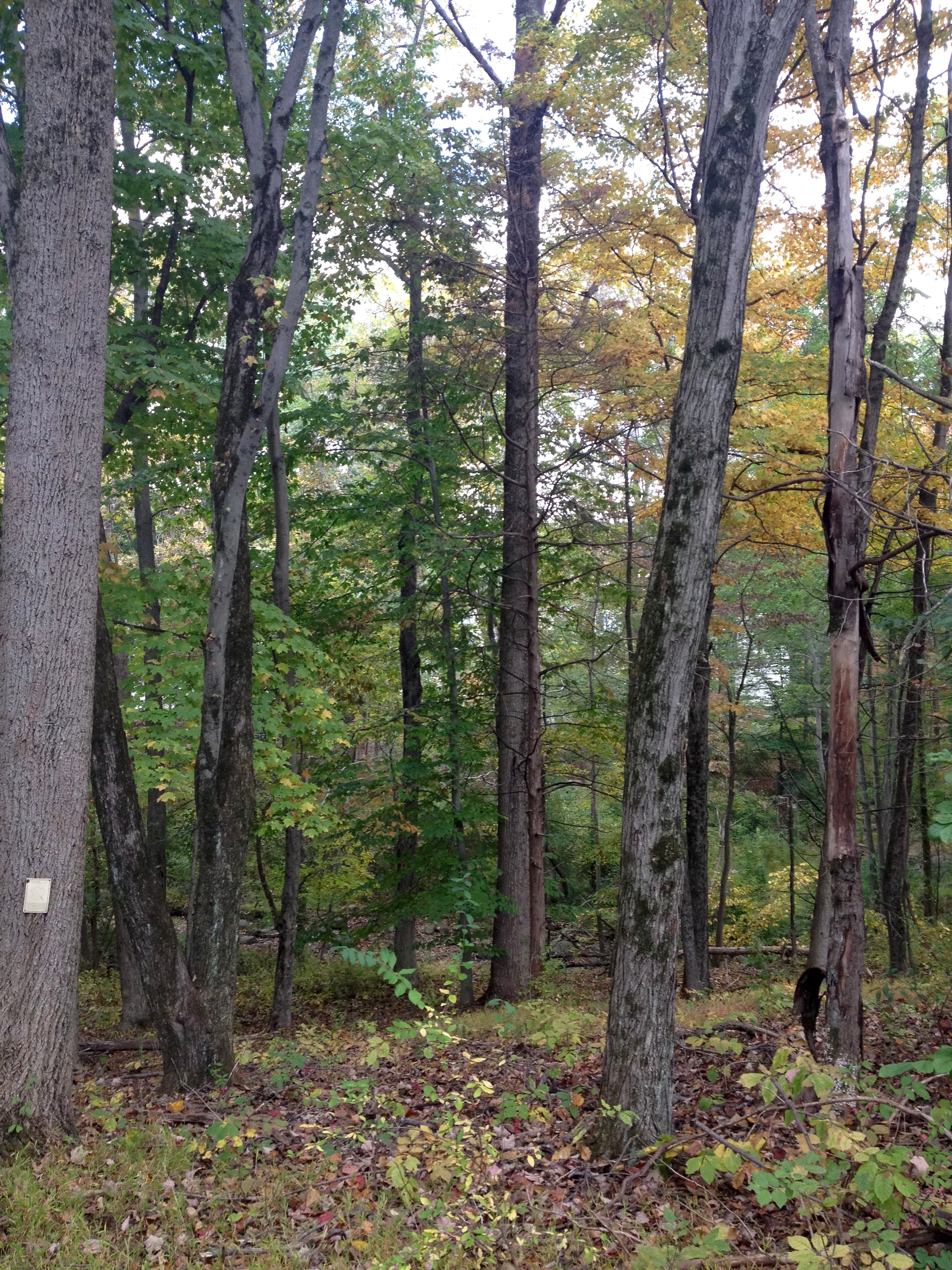


 The Treehouse